
March 5, 2025
Did Winter Wreck Your CT Roof? Why You Need a Spring Checkup ASAP
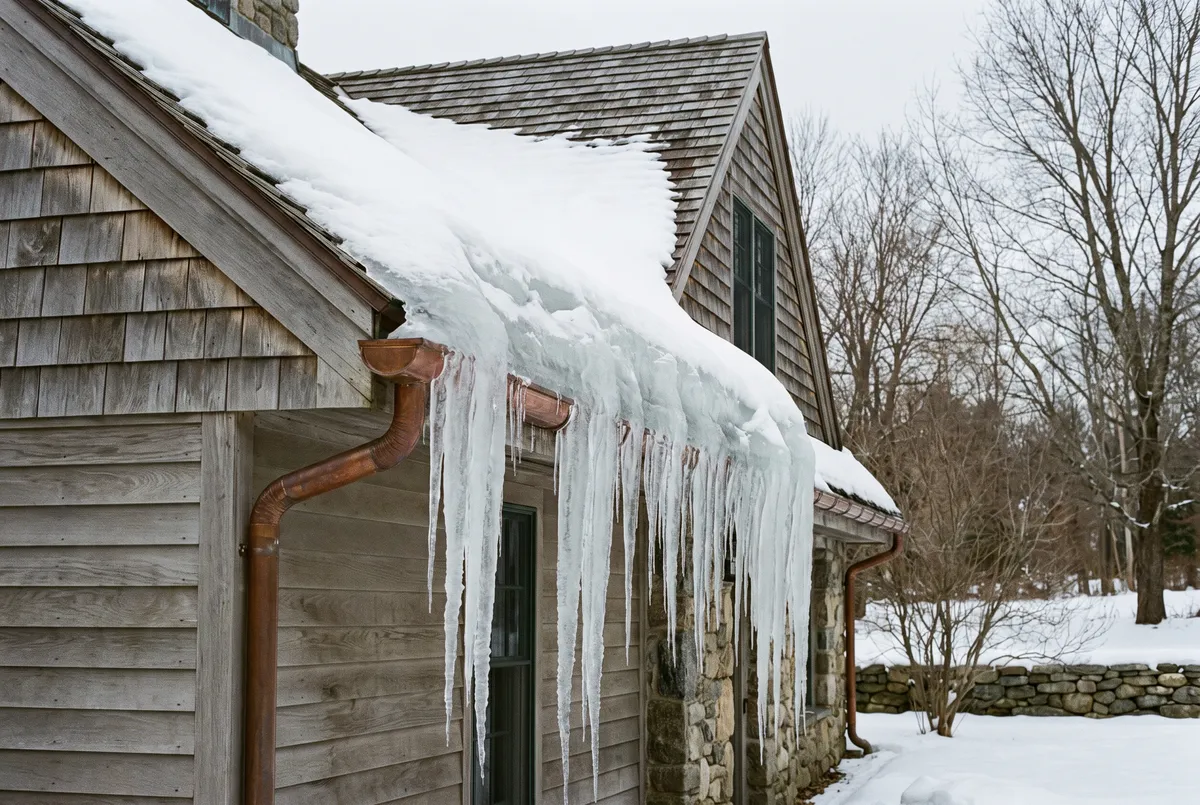
Connecticut winters are relentless. Even if your roof survived the Nor'easters without a major collapse, the real danger often reveals itself only after the snow melts. Many homeowners assume their property escaped unharmed, only to discover severe water intrusion once the April showers begin.
To spot post-winter ice dam and snow damage on your roof, you should look for 4 critical signs: lifted shingles at the eaves, fascia board rot, crushed gutters, and damp attic insulation. We will expand on exactly what these mean below. Identifying these issues in the spring prevents massive structural rot and mold growth during the summer.
At Omega Development LLC, we pride ourselves on our unmatched expertise. We don't just patch roofs; we engineer the roofs to survive the harsh Fairfield County climate. As an expert roofing contractor in the Westport area, we know exactly what freezing temperatures do to building materials. Here is the science behind what winter did to your roof, and how our expert team diagnoses the hidden damage.
The Physics of Connecticut Ice Dams
Thermal Bypasses and The Freeze-Thaw Cycle
Ice dams begin inside your home. Heat naturally rises, escaping your living space through poorly sealed attic hatches or recessed lighting. This creates localized hot spots on your roof deck. The snow directly above these hot spots melts and flows down the roof. Once that water reaches the cold overhangs of your eaves, it refreezes. Over the course of a winter, this freeze-thaw cycle builds a massive wall of solid ice at the edge of your roof.
Hydrostatic Pressure vs. Your Shingles
When water backs up under the shingles and freezes, it behaves like a pry bar. According to basic physics, water expands by approximately 9% when it freezes. This expansion exerts extreme hydrostatic pressure. It physically lifts your asphalt shingles, breaking the manufacturer's adhesive seals and permanently compromising your roof's waterproofing. Once those seals break, your home is highly vulnerable to wind-driven rain.
4 Hidden Signs of Winter Roof Damage
Lifted Shingles and Broken Seals at the Eaves
Even if a shingle has not completely blown away, an ice dam may have lifted it. From the ground, your roof might look perfectly fine. However, broken adhesive strips mean the shingles will no longer lay flat. Spring rains will blow right underneath these compromised areas and soak your roof deck.
Fascia Board and Soffit Rot
When ice dams block water from draining properly, that water often sits directly against the wooden fascia boards behind your gutters. We frequently see advanced wood rot in these areas during our spring inspections. By addressing this early, you save thousands of dollars in structural framing repairs.
Crushed or Detached Gutters
Ice is incredibly heavy, weighing nearly 60 pounds per cubic foot. Solid ice blocks resting in your gutters over the winter can easily bend the aluminum. In severe cases, this massive weight pulls the fasteners right out of your home's structural framing, leaving your gutters detached and useless.
Compromised Attic Insulation (Loss of R-Value)
If water breached the roof deck during the winter, it likely soaked your fiberglass attic insulation. According to the U.S. Department of Energy, wet insulation permanently loses its thermal resistance, also known as its R-value. This means your home will struggle to retain cool air, causing your summer air conditioning bills to skyrocket.
The Omega Development LLC Inspection Process
Our team utilizes advanced diagnostics to protect your home. We evaluate your attic's ventilation against the standard 1/150 rule, ensuring you have the proper balance of intake and exhaust airflow to prevent future ice dams. We also check the integrity of your structural decking and confirm that your home meets the International Residential Code (IRC) requirements, which mandates that an ice barrier extends at least 24 inches inside the exterior wall line.
If you suspect winter weather has compromised your home, our vetted crews are ready to perform a comprehensive post-winter roof inspection and repair to restore your building's envelope.
We deliver elite, high-velocity repairs to get your property watertight before the heavy spring storms arrive. As a dedicated roof repair contractor, we utilize diagnostic precision to identify the root cause of leaks, replace missing shingles, and perform roof leak repair before damage spreads.
Stop Winter Rot Before Summer Storms Arrive
Ice dams and heavy snow loads create systemic vulnerabilities that rot your home from the outside in. Identifying these issues early is the only way to protect your investment.
Don't let winter's hidden damage destroy your summer plans. Contact Omega Development today for an expert roof evaluation, and trust your Fairfield County home to the true roofing professionals.
Frequently Asked Questions
Why did my roof get an ice dam while my neighbor's roof did not?
Ice dams are rarely caused by the roofing material itself; they are a symptom of poor attic ventilation and inadequate insulation. If your neighbor's roof has a balanced intake and exhaust airflow system that keeps the attic temperature consistent with the outside air, snow will not melt and refreeze at the eaves. At Omega Development, we correct these underlying ventilation issues during our installations.
Will my roof leak in the spring if an ice dam broke the shingle seals?
Yes, it is highly likely. The adhesive strips under your asphalt shingles are designed to keep wind-driven rain out. When hydrostatic pressure from freezing ice breaks those seals, the shingles will no longer lay flat. Spring rainstorms, accompanied by coastal winds, will easily drive water under the lifted shingles and into your roof decking.
Are gutters responsible for causing ice dams?
No, gutters do not cause ice dams, but they can exacerbate the damage. An ice dam forms on the roof's edge due to temperature differentials. However, if your gutters are clogged with autumn debris, the melting water has nowhere to go, freezing solid inside the gutter and adding massive, destructive weight to your home's fascia boards.